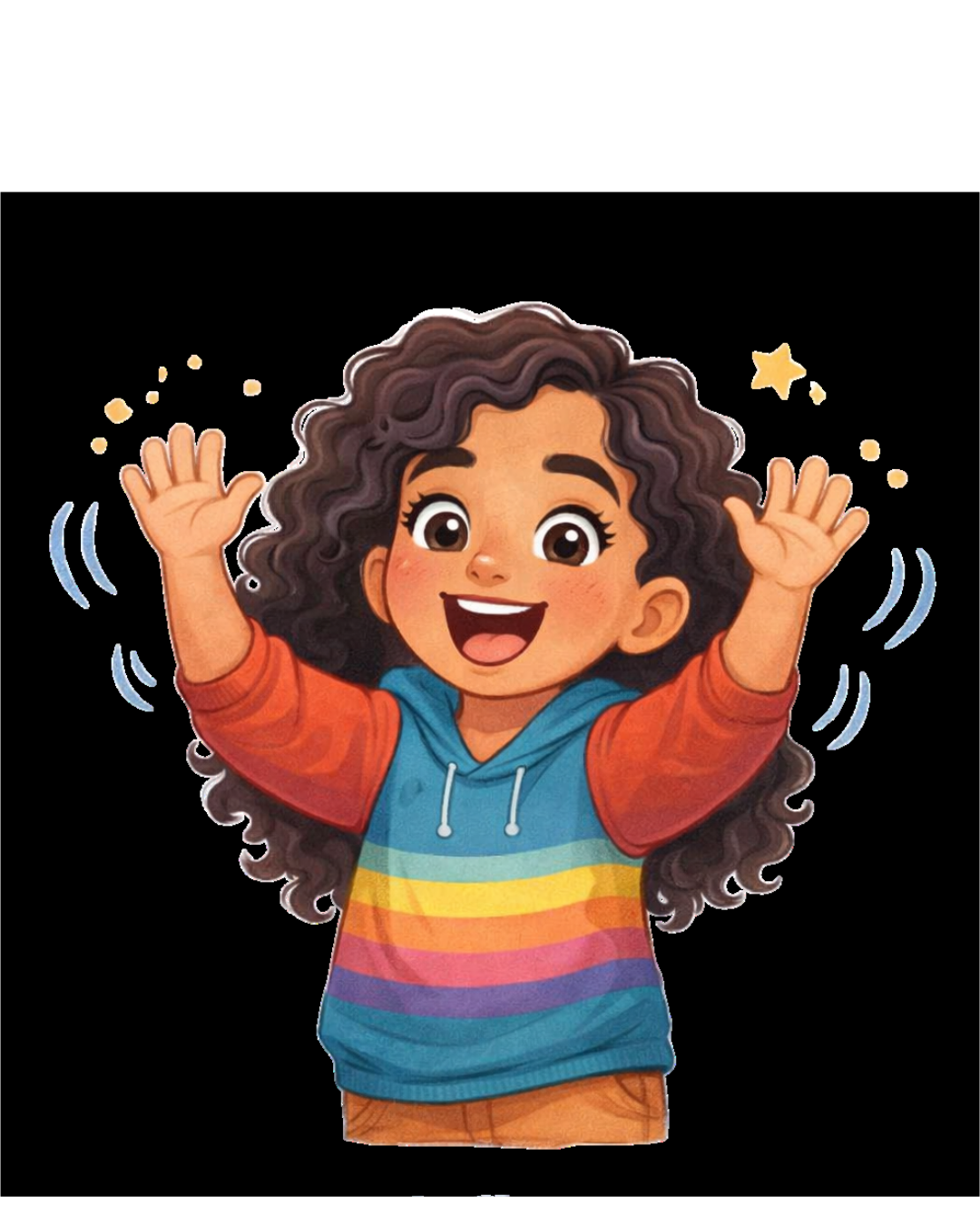
Stimming and Autism: Why I Let My Daughter Flap Her Hand
My daughter flaps her hands when she is happy, frustrated, or excited, and I used to try to stop it. Here is what I learned about stimming, autism, and why I will never correct her again.
Fabiana Pereira
6/2/20265 min read
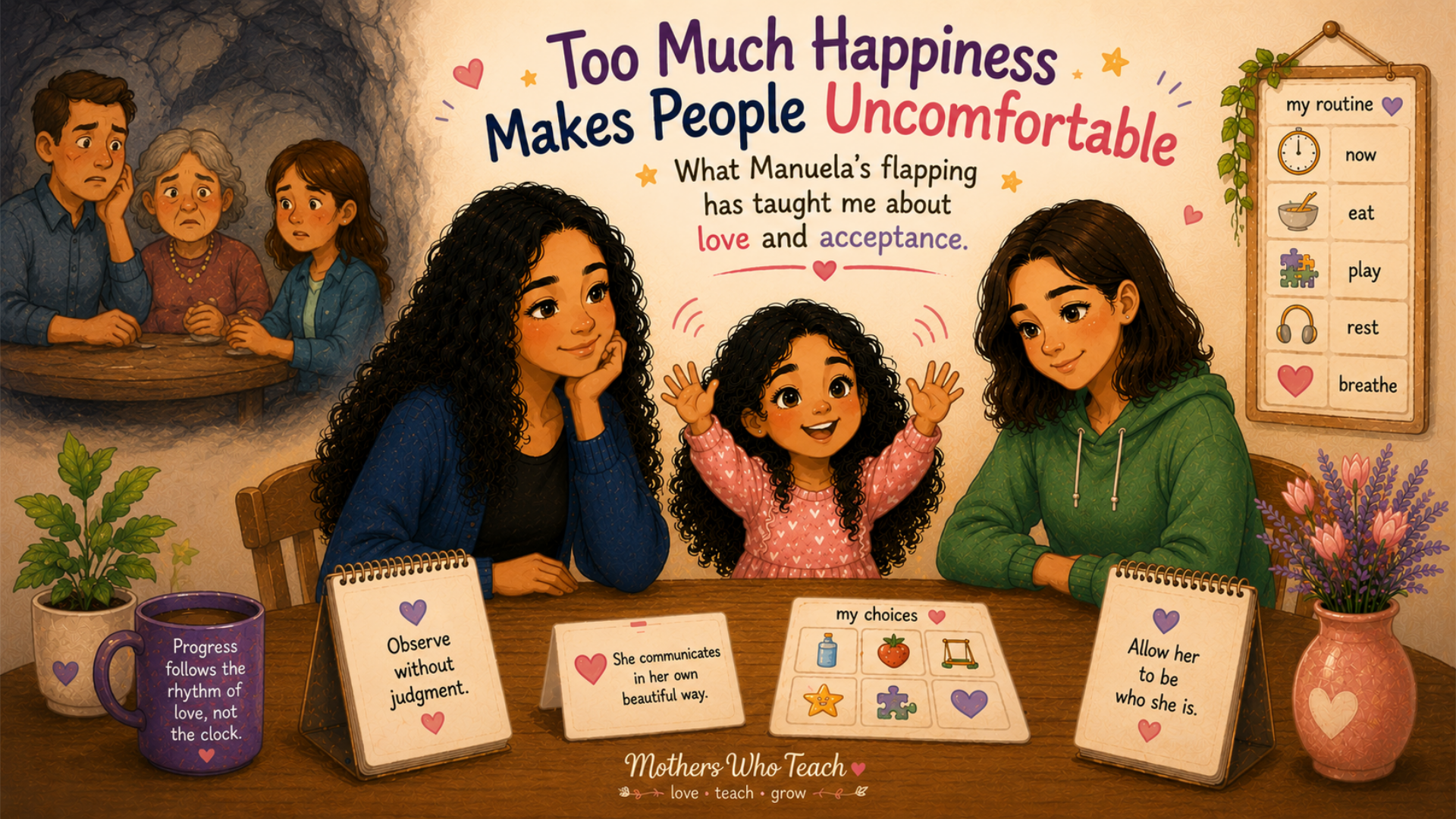
What Manuela's Flapping Taught Me About Love and Acceptance
There was a time when I didn't understand.
Manuela flaps her hands when she is happy, when she gets excited, when something catches her attention. Or sometimes out of nowhere, something happens and her arms start moving. That is called flapping. It happens when her favorite song comes on, when I offer her a yogurt, when she finds something new that she loves.
And I will be honest: in the beginning, I didn't know what to do with it.
At first I thought it was just happiness. But over time I noticed that she also flaps when she is frustrated, when something doesn't go the way she expects, when the world around her feels too big to fit inside her little body.
This started to worry me. I will admit that I tried to stop it at first, because I was afraid of people's looks, because I felt unsure, because everything was so new.
And then came the advice that still hurts me to remember.
When a Specialist Gets It Wrong
Right after the Autism and ADHD diagnosis, when Manu was 3 years old, a psychologist, who was well recommended and part of the team of the psychiatrist who gave us the diagnosis, told me to push her hands down every time she flapped. According to her, it was an inappropriate behavior that needed to be corrected.
Everything was so new, so scary. I knew nothing about the autism spectrum. And when you don't know, you trust the specialists.
So I followed the advice.
When I think about that now, I feel an enormous amount of guilt. Even today, I get emotional talking about it. Because I could see, with my own eyes, how much it was hurting Manu. She would run and hide. She would stare at her own hands as if they had done something wrong.
She is non-verbal. I will never know exactly what was going through her mind in those moments.
And that breaks my heart to this day.
What I learned from this: specialists make mistakes too. Many of them still treat autism as something to be fixed, something to be shaped into a "normal" mold. And parents, especially at the beginning, put all their trust in these voices because they are scared and need direction. If you are in that place right now, hearing advice that makes your heart feel tight: trust your instinct. You know your child better than anyone.
What Flapping Is and Why It Happens
Flapping is a type of stimming, which is short for self-stimulatory behavior. It is any repeated movement or action that helps a person manage their feelings, stay focused, and process what they are going through using their senses.
For Manuela, flapping is self-regulation. It is her nervous system finding balance in a world that is often too loud, too unpredictable, too intense.
It shows up in joy. It shows up in frustration. It shows up in deep focus.
It is not a lack of control. It is control, in the way her body learned to do it.
And when I learned to see that, everything changed. I noticed that when I let Manu move freely, run in circles, swing her feet, do the flapping, she was much more open to learning, to connecting, to receiving what I wanted to teach her. Her body needed to move so her mind could be present.
Too Much Happiness Makes People Uncomfortable
Manu is 9 years old today. She still flaps and she will do it for the rest of her life. It is part of who she is.
Most people who meet her can see that she is autistic. Some understand. Others give looks. And some, the ones that hurt the most, are people close to us. People who say they "understand."
Once, a family member asked to change seats at the dinner table. They were uncomfortable sitting next to Manu because she was moving her hands and feet.
In moments like that, I have to choose: make a scene or let it go.
That day, I was a little sarcastic. I smiled and said:
"I totally understand. Better to move seats. Too much happiness makes people uncomfortable."
Inside? I was holding back a lot. But I hold myself together for Manu, for her sister, for the peace of my daughters. I do my best to make sure they grow up knowing they are special, that they are not a problem. The problem is ignorance. And ignorance can be fixed, if the person wants to learn.
When someone gets scared by her flapping, when they think she might hurt someone, I take a deep breath and explain. I usually have the explanation ready. When I don't have the energy for that, I simply ignore it, because if I fight every single time, I won't have strength left for what really matters.
Celebrating Together
When the flapping comes from joy, I celebrate with her.
We give each other a high five. I smile for real. And I keep in mind what made her feel that way, because those moments become tools. When she is close to a meltdown, when frustration hits hard, I remember those scenes or I try to bring back that positive moment to help her find her balance again.
Learning to read her flapping was learning to speak her language.
What I Would Say to Myself
If I could go back and talk to the Fabiana from when Manu was 3 years old, the one who was pushing her daughter's hands down because a psychologist told her to, I would say:
Follow your heart. Don't be afraid. Even when a specialist gives you advice that makes you feel wrong inside, don't do it. Specialists make mistakes too. You are the mother. You know her. Trust that.
For Anyone Reading This Right Now
If you have a child who stims, whether it is flapping, rocking, spinning, or repeating sounds, and you are wondering whether you should stop it:
Don't stop it. Watch it.
Ask yourself: what is my child feeling right now? Are they happy? Frustrated? Overwhelmed? Their body is telling you something.
Stimming is not a problem. It is communication.
Our job is not to silence that language. It is to learn how to listen to it.
And when you understand what your child's body is saying, everything gets a little easier. Teaching gets easier. Connection gets easier. The love that was already there finds a clearer path.
Manu will always flap her hands. I hope she never stops.
That movement is her: whole, real, and completely herself.
And that will always be enough.
💜 Follow Mothers Who Teach for more real stories about autism, love, and the small miracles hidden in everyday moments.
📩 Leave your email and I'll send you each new story personally—along with the lessons, strategies, and discoveries I'm learning while raising two autistic daughters.